Review: I Crushed 100 Days of School Design PNG
As an embroidery designer who spends half my life digitizing and the other half testing files on actual fabric, I have learned to look past the glossy mockups. We all know that what looks crisp on a screen can sometimes turn into a puckered mess under the needle. Recently, I evaluated I Crushed 100 Days of School Design Png with a specific goal in mind: determining its viability for real-world craft business applications. While this asset is marketed primarily as a sublimation file for T-Shirt Designs and Graphics, many of us in the handmade community are constantly looking for versatile visuals that can be adapted for various mediums, from heat transfer vinyl to complex machine embroidery projects.
First Impressions and Visual Personality
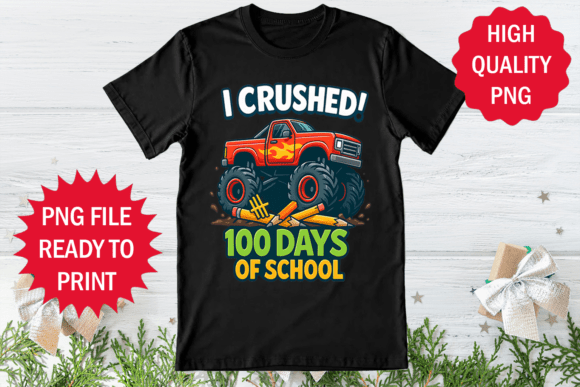
The first thing that strikes you about I Crushed 100 Days of School Design Png is its energetic mood. It captures that specific milestone excitement that parents and teachers love. The layout is bold, which is crucial for visibility. In the world of custom apparel, especially for children, subtlety often gets lost. This design shouts celebration. The colorful graphic nature suggests a trendy aesthetic that fits well with current boutique styles. However, as a reviewer, my immediate concern was not just how it looked, but how those colors and shapes would translate when I moved away from digital printing and toward stitching or other textured applications.
For those of us running a small shop product line, visual appeal is everything. This design has high recognition value. It is instantly identifiable as a "100 Days" item, which reduces the cognitive load for your customer. They do not have to guess what the occasion is. This clarity builds buyer engagement and trust, two pillars of a successful Etsy seller strategy. But does it hold up under scrutiny? That depends entirely on how you choose to produce it.
Real-World Application: The Sweatshirt Test
To test the practicality of this asset, I imagined a common scenario: a parent ordering a personalized gift for their child’s big day. I visualized placing this design on a heather grey sweatshirt. Since the source file is a PNG intended for sublimation, direct embroidery would require significant digitizing work. If you are an embroidery professional, you would need to convert this graphic into a proper embroidery file, carefully mapping out satin stitch borders and fill stitch areas to maintain the integrity of the original art.
If you are using this as a sublimation print, the results on polyester-blend fabrics are typically vibrant and durable. The design shines here because the colors remain bright after washing, a key factor for school items that go through the laundry weekly. For a tote bag design, the large surface area allows the graphic to breathe. You do not have to worry about shrinking the details too much. The bold lines ensure that even from a distance, the message is clear. This makes it an excellent candidate for holiday embroidery gifts or back-to-school bundles that you might offer in your craft business.
Considerations for Smaller Items
Things get trickier when we scale down. If you are considering this for a cap or a baby embroidery project on a onesie, you must exercise caution. The intricate details in colorful graphics can become muddy if reduced too far. On a curved surface like a baseball cap, registration issues can occur if the design is too wide. I would advise checking the dimensions carefully. If you plan to create an embroidered patch based on this look, ensure your digitizer simplifies the color transitions. Too many thread colors in a small hoop size can lead to excessive thread breaks and production time.
For textured fabrics, such as terry cloth towels or fleece blankets, the sharp edges of a digital PNG might not translate perfectly without proper stabilization. A cut-away stabilizer is non-negotiable here to prevent distortion. If you are adapting this into an applique design, you could use the solid shapes as cut pieces, which would reduce stitch density and make the finished product softer and more comfortable for a child to wear. This is a smart move for baby clothes where comfort is paramount.
Commercial Viability and Brand Consistency
From a business perspective, I Crushed 100 Days of School Design Png offers strong potential for commercial embroidery projects and digital product sales. However, licensing is the elephant in the room. Since this is sold as a graphic for T-Shirts, Banners, and Posters, you must confirm whether the license extends to physical handmade products or if it is strictly for print-on-demand. Never assume. Always read the terms before listing items in your small shop product catalog.
Assuming the license permits it, this design fits seamlessly into a spring seasonal collection. It pairs well with other academic milestones, allowing you to create a cohesive brand narrative. When used in printable mockups for your online store, it helps customers visualize the final outcome. High-quality presentation leads to higher perceived value. Customers are willing to pay more for a product that looks professional and thoughtfully designed. This graphic provides that polished look, provided you execute the production correctly.
Practical Designer Notes for Execution
Before you commit to producing a batch of these items, here are some practical steps I recommend for any designer working with this type of asset:
- Test on Scrap Fabric: Never run a new design on your final garment without a test stitch-out. Check for puckering and thread tension issues.
- Check Thread Color Contrast: If digitizing, ensure your thread colors pop against the fabric. Dark thread on dark fabric will disappear, ruining the impact of the design.
- Review Stitch Density: High-density fills can make garments stiff. Use lighter fill patterns or break up large areas with running stitch details to keep the fabric flexible.
- Confirm Hoop Size: Ensure your machine’s hoop can accommodate the full width of the design without re-hooping, which risks misalignment.
- Inspect Small Details: Zoom in on the digital file. Are there tiny elements that might get lost? Simplify them if necessary for better stitching clarity.
- Mockup in Black and White: Convert the design to grayscale to check value contrast. If it looks flat in black and white, it may lack depth in person.
- Compare Backgrounds: Visualize the design on both light and dark fabric backgrounds. You may need to add a white underlay or border for visibility on darker garments.
- Use Proper Stabilizer: Match your stabilizer to your fabric. Knits need stretch support; wovens need tear-away or cut-away depending on the item's use.
- Verify Licensing: Double-check if the file allows for commercial use of finished physical goods, not just digital prints.
Final Verdict on Usability
In conclusion, I Crushed 100 Days of School Design Png is a vibrant, eye-catching asset that serves its primary purpose well. For sublimation on T-shirts and hoodies, it is a strong contender that requires minimal prep. For embroidery designers, it presents a creative challenge. It requires careful adaptation to ensure the spirit of the graphic survives the translation to thread. If you are willing to put in the digitizing work or use it as a base for applique, it can elevate your custom apparel offerings. It is not a plug-and-play embroidery file out of the box, but as a design foundation, it has the personality and structure needed to create memorable, high-quality handmade products. Just remember to respect the technical limitations of your machines and fabrics, and always prioritize the comfort and durability of the finished product for the end user.