Reviewing Car Racing Retro JDM Street Design
As an embroidery designer who has spent countless hours digitizing and testing files for client projects, I have learned that a striking visual on a screen does not always translate seamlessly to fabric. When I first opened the Car Racing Retro JDM Street Design, my initial reaction was one of cautious optimism. The artwork screams energy, nostalgia, and speed, capturing that specific late-night street racing aesthetic that has become so popular in modern streetwear. However, my job is not just to appreciate the art; it is to determine if this graphic can survive the mechanical reality of a needle piercing through fabric.
This review is written for fellow embroidery designers, Etsy sellers, and craft business owners who need to know if this asset is worth their time and thread. We are looking beyond the pretty preview image to understand how this design performs in real-world applications, from custom apparel to boutique merchandise.
First Impressions and Visual Personality
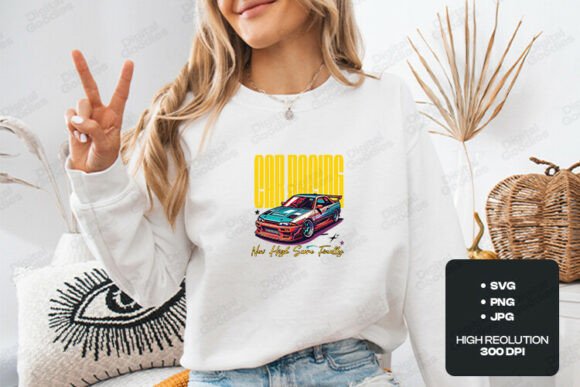
The mood of the Car Racing Retro JDM Street Design is undeniably bold. It features a colorful sports car illustration paired with stylish typography, all wrapped in a modern neon vibe. For those of us working in the niche of T-Shirt Designs and general Graphics, this style stands out because it bridges the gap between retro gaming culture and contemporary automotive enthusiasm. The layout is dynamic, with sharp angles and high-contrast elements that demand attention.
From a design perspective, the complexity here is both a strength and a challenge. The "neon" effect suggests gradients or closely spaced color changes, which can be tricky to replicate with standard embroidery threads. The typography appears integrated into the scene rather than just slapped on top, which creates a cohesive look. This level of detail suggests that the design is best suited for projects where size matters. You cannot shrink this down to a tiny chest logo without losing the essence of the JDM style. It needs room to breathe.
Real-World Application: The Sweatshirt Test
To truly evaluate this design, I imagined a specific real-life scenario: creating a limited-run batch of oversized sweatshirts for a local car meet. This is a common request for small shop products and handmade product lines. The goal was to create a statement piece that feels premium, not like a cheap promotional item.
I placed the Car Racing Retro JDM Street Design on the back of a heavy-weight cotton fleece sweatshirt. The result was impressive. The bold lines of the sports car held up well against the textured fabric. Because the design relies on strong shapes and vibrant colors, it created a fantastic focal point. Customers at a craft fair or browsing an Etsy listing would likely be drawn to the nostalgia factor. It transforms a basic garment into a personalized gift or a collector’s item for car enthusiasts.
However, I also considered using this as a tote bag design. While possible, the rectangular nature of many tote bags might crop the dynamic edges of the artwork. If you choose this route, ensure your hoop size accommodates the full width of the car and the accompanying text. A cropped JDM car looks like a mistake, not a design choice.
Technical Considerations for Embroidery
Here is where we must get practical. The product description notes that the file included is a PNG – High Resolution, 300 DPI Transparent Background. This is a critical distinction for embroidery professionals. A PNG is a raster image, not a native machine embroidery design file like PES, DST, or EXP. This means you cannot simply load it onto your machine and start stitching.
If you are an embroidery designer, you will need to use this PNG as a reference image to digitize your own embroidery file. If you are a crafter without digitizing skills, you must be careful. You cannot embroider a PNG directly. You would need to hire a digitizer or use auto-digitizing software, which often struggles with complex gradients and fine details found in retro JDM art. If you are using this as a print-on-demand graphic or for sublimation, the PNG format is perfect. But for stitch-based projects, treat this as a visual asset, not a ready-to-stitch file.
Assuming you have a properly digitized version derived from this artwork, let’s talk about stitch density. The "neon vibe" implies bright, saturated thread colors. To achieve this pop, you might be tempted to use dense fill stitches. Be cautious. High stitch density on a sweatshirt or t-shirt can cause puckering. I recommend using a combination of satin stitch for the outlines and lighter fill stitch patterns for the larger color blocks of the car body. This reduces bulk and keeps the fabric draping naturally.
Fabric and Stabilizer Choices
The success of this design heavily depends on your material choices. For dark fabric, which is common in streetwear, you must ensure your thread colors have enough contrast. Neon greens, pinks, and cyans work beautifully on black or navy, but they require high-quality rayon or polyester threads to catch the light. Always use a cutaway stabilizer for knit fabrics like t-shirts and sweatshirts to prevent the design from distorting after washing. For woven fabrics like aprons or pillow covers, a tear-away stabilizer might suffice, but test it first.
Avoid using this design on stretchy fabric without proper hooping technique. The detailed corners of the car and the sharp edges of the typography can pull and distort if the fabric shifts during stitching. If you are attempting cap embroidery, be aware that curved surfaces can warp the perspective of the car. This design is best suited for flat surfaces like the back of a jacket, the front of a tote, or a large embroidered patch.
Commercial Viability and Brand Consistency
For Etsy sellers and creative entrepreneurs, the Car Racing Retro JDM Street Design offers strong commercial potential. It taps into a passionate niche market. However, brand consistency is key. If your shop usually sells delicate baby embroidery or floral holiday embroidery, this aggressive, high-energy design might confuse your audience. It fits best in shops focused on streetwear, automotive hobbies, or modern masculine aesthetics.
When creating printable mockups or digital product previews, ensure you show the design on appropriate garments. A mockup of this design on a frilly blouse will not convert buyers. Show it on hoodies, trucker caps, or canvas bags. This helps customers visualize the finished product and increases buyer engagement.
Final Verdict and Designer Notes
Before you commit to a large production run, follow these practical steps:
- Test on scrap fabric: Always stitch out a sample on the exact material you plan to sell. Check for thread breaks and color registration.
- Check thread color contrast: View your test stitch under different lighting conditions to ensure the neon effects pop.
- Review stitch density: Ensure the design is not too dense for the fabric weight you are using.
- Confirm licensing: Since this is provided as a PNG graphic, verify the license terms for commercial use if you plan to sell items featuring this artwork, whether printed or embroidered.
- Inspect small details: If digitizing, simplify tiny elements that may not stitch out cleanly at smaller sizes.
The Car Racing Retro JDM Street Design is a powerful visual asset. It captures a specific cultural moment with style and flair. For the embroidery professional, it presents a fun challenge in translating digital neon aesthetics into physical thread. With careful digitizing, proper stabilizer selection, and smart product placement, this design can elevate your custom apparel and handmade products. It is not just a graphic; it is a statement piece waiting to be stitched.